
Compliance Outsourcing Services in Switzerland

Introduction of FINIG, FIDLEG, and Related Regulations

In 2020, the FINIG, FIDLEG, and related regulations such as FINIV, AOV, and FIDLEV were introduced. These changes significantly increased the requirements for licensing, supervision, organization, and internal control of financial institutions.

Increased Regulatory Compliance Requirements

Independent asset managers and trustees are now classified as financial institutions and require a license. They are also subject to financial market supervision, necessitating appropriate corporate governance rules and a structure that ensures compliance with legal obligations.

Compliance and Risk Management

Asset managers and trustees must have robust risk management and effective internal controls to ensure adherence to regulations.

The Anti-Money Laundering Act (AMLA) requires financial intermediaries to ensure sufficient training for their staff and conduct controls.

Compliance Outsourcing
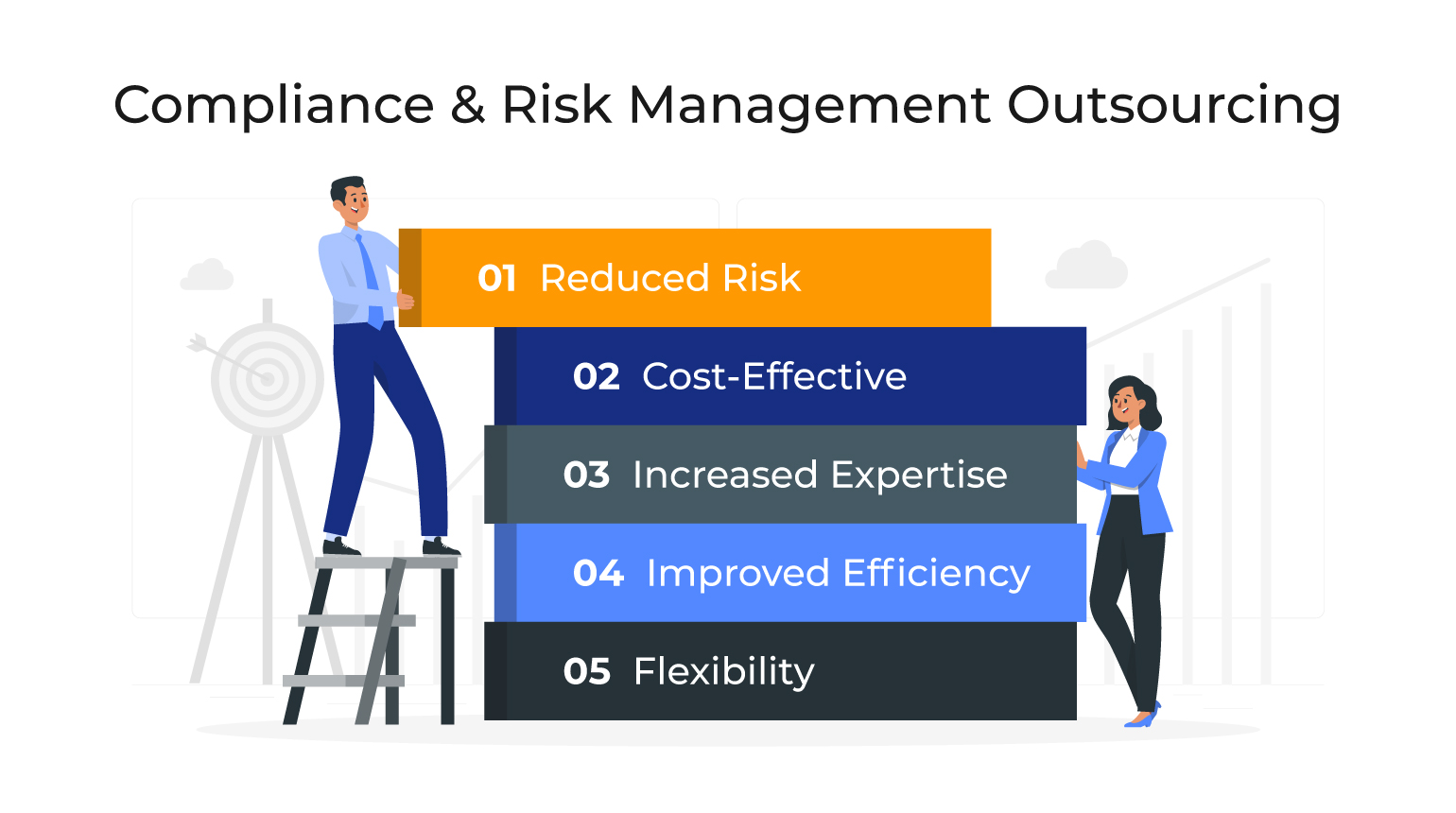
Compliance Outsourcing Services

Authorities often require a functional separation between supervised business activities and compliance and risk management. Separating and outsourcing the compliance function can meet this requirement efficiently.

Efficiency for Small and Medium-Sized Asset Managers

Small and medium-sized asset managers often lack the necessary expertise and personnel resources. Staff turnover of employed compliance officers results in a significant loss of know-how. For these firms, outsourcing AMLA compliance tasks to an external expert is the most efficient solution (Compliance Outsourcing Services).

Professionalism and Cost-Efficiency

Outsourcing to an external compliance officer can provide the necessary expertise and resources while also being cost-effective. Compliance outsourcing services offer a high level of professionalism and efficiency, making it a practical solution for small and medium-sized asset managers.er eliminates unnecessary training costs for internal staff. External compliance officers provide tailored support that is both cost-effective and highly professional.

Service-Oriented Approach

By outsourcing, asset managers purchase a service, relieving them from the need to manage their own internal teams. No need to take care of recruitment, interviews, illness, etc. of compliance officers anymore.

Consultation and Process Optimization

External compliance officers offer comprehensive advice on AMLA obligations and assist in optimizing internal processes. They can also handle tasks such as drafting directives and contracts. Last but not least they can provide basic data protection coverage.

Focus on Core Business - not on regulatory requirements

An external compliance officer ensures adherence to all legal and internal regulations. Allowing financial service providers to focus their resources on their core business. This allows them to serve clients without burdening themselves with administrative tasks.

Risk Management Outsourcing

Asset managers must comply with stringent legal requirements, making effective risk management indispensable. This involves identifying, assessing, and controlling risks arising from market movements, processes, and legal changes. The complexity and scope of these tasks make risk management a critical component of any company’s strategy.

How Risk Management Outsourcing Works

In risk management outsourcing, the asset manager works closely with a professional who develops tailored solutions. The process typically includes:

  1. RISK ANALYZING:
    Comprehensive assessment of current risks, including market, credit, liquidity, and operational risks.
  2. STRATEGY AND GOALS:
    Development of a risk management strategy aligned with the asset manager’s specific requirements and objectives.
  3. IMPLEMENTATION:
    Introduction of necessary processes, systems, and controls to manage identified risks effectively.
  4. MONITORING AND REPORTING:
    Continuous monitoring of risks and regular reporting to the asset manager to ensure transparency and control.
  5. ADJUSTMENT AND OPTIMIZATION:
    Ongoing adjustment and optimization of processes based on changing market conditions and legal requirements.

Benefits of Risk Management Outsourcing

  • ACCESS TO EXPERTISE:
    Asset managers can meet stringent legal requirements and ensure effective risk management.
  • COST SAVINGS:
    Hiring and training internal staff can be costly and time-consuming.
    External providers offer efficient, tailored solutions.
  • FLEXIBILITY:
    External risk management services can easily adapt to changing business volumes — ideal for growing asset managers.
  • COMPLIANCE:
    A stringent compliance framework reduces the risk of penalties and legal consequences due to compliance violations.
  • REPORTING:
    Regular collection, analysis, and reporting of risk data provide insights into current exposures.
    Clear reporting supports informed decisions and strategy development while ensuring legal compliance.

Case Study: Ultimate Beneficial Owner (UBO) Identification

The financial industry faces growing challenges because of complex legal requirements and stricter controls. A crucial aspect is the clear identification and verification of UBOs.

Importance of UBO Identification

Identifying the UBO is a legal obligation. Failure to clarify UBO status can lead to significant legal and financial consequences. Therefore, clear and effective processes for determining UBOs are essential.

  • THOROUGH CUSTOMER REVIEWS:
    Conduct comprehensive reviews to identify and confirm the UBO.
  • TECHNOLOGICAL SUPPORT:
    Use advanced technologies for transaction monitoring.
    Modern software supports large-scale data analysis.
    AI and machine learning can automatically identify patterns and anomalies — improving efficiency and accuracy while reducing human error.
  • REGULAR TRAINING:
    Regularly train staff on the latest compliance requirements.

Conclusion on Compliance Outsoursing Services

Compliance and risk management outsourcing offer significant advantages for asset managers. Outsourcing partners meet legal requirements while optimizing processes.

By outsourcing, asset managers purchase a solution and avoid the need to manage internal compliance personnel.

External experts specialize in legal compliance, allowing asset managers to focus on their core business. This results in better customer care and more efficient business operations.

Overall, outsourcing provides a professional and efficient solution, enabling asset managers to concentrate on their core business and clients.

Die Experten der Peak Compliance stehen Ihnen jederzeit gerne zur Verfügung.

Reto Picenoni

Erstgespräch buchen+41 58 510 77 45info@peakcompliance.ch

Compliance Outsourcing Services in Switzerland

Das Beraterregister Schweiz: Jeder Finanzberater, der nicht einer umfassenden Aufsicht untersteht, muss im Beraterregister eingetragen sein.

Unser kompaktes E-Learning schult Sie praxisnah und effizient. Mit Abschluss der Schulung können Sie sich Kundenberaterinnen und -berater im Beraterregister eintragen lassen.

Die Vorteile

Grundschulung

Start

jederzeit möglich

Format

Online-Videoschulung

Sprachen

Deutsch und Englisch

Abschluss

Verleihung des Zertifikats «FIDLEG – Kenntnisse der Verhaltensregeln (Grundschulung)» / Gültig für den Eintrag im Beraterregister

Zertifizierungsstelle

BX Swiss AG / regservices.ch

Kompakt-Kurs

Dauer 4h

Refresher Kurs

Start

jederzeit möglich

Format

Online-Videoschulung

Sprachen

Deutsch und Englisch

Abschluss

Verleihung des Zertifikats *Refresher: FIDLEG Verhaltensregeln* / Gültig für die Erneuerung der Eintragung (24 Monate) im Beraterregister

Zertifizierungsstelle

BX Swiss AG / regservices.ch

Kompakt-Kurs

Dauer 2h

Warum eine Schulung zum Beraterregister?

  • Rechtssicherheit: Verstehen Sie die gesetzlichen Grundlagen und vermeiden Sie Haftungsrisiken.
  • Praxiswissen: Erhalten Sie konkrete Einblicke in die Praxis.
  • Compliance-Vorteil: Erfüllen Sie die Anforderungen von FIDLEG und steigern Sie das Vertrauen Ihrer Kunden.
  • Aktuelles Know-how: Inhalte basieren auf den neuesten gesetzlichen Vorgaben in der Schweiz.

E-Learning Beraterregister (Grundschulung | Refresher)

Inhalte der Beraterregister Schulung

Teil 1: Grundlagen und Verhaltensregeln

  • Ziele und Anwendungsbereich des FIDLEG
  • Definition von Finanzdienstleistern und Gewerbsmässigkeit
  • Regelungen für ausländische Finanzdienstleister
  • Fünf Hauptarten von Finanzdienstleistungen
  • Kundensegmentierung: institutionelle, professionelle und private Kunden
  • Opting-IN / Opting-OUT, Unterschiede FIDLEG vs. KAG
  • Verhaltenspflichten: Angemessenheit, Eignung, Informations- und Dokumentationspflichten

Teil 2: Organisation und Interessenkonflikte

  • Regulierungs- und Bewilligungspflichten
  • Eintragung ins Beraterregister Schweiz
  • Corporate Governance und Weiterbildungspflichten
  • Beizug Dritter und Zusammenarbeit mit Ombudsstellen
  • Umgang mit Interessenkonflikten: Drittentschädigungen, Eigenhandel, Offenlegungspflichten

E-Learning Beraterregister (Grundschulung | Refresher)

Ihre Vorteile auf einen Blick

Schneller Überblick über alle relevanten FIDLEG-Vorgaben
Ideal für Einsteiger und erfahrene Berater
Kompakte und praxisnahe Inhalte
Anerkannt für die Eintragung ins Beraterregister

E-Learning Beraterregister (Grundschulung | Refresher)

Hintergrund des Beraterregisters

Wer in der Schweiz Finanzdienstleistungen in der Schweiz anbietet und nicht bereits einer umfassenden Aufsicht unterstellt ist, muss sich in das Beraterregister eintragen lassen. Zuständig sind die von der FINMA anerkannten Registrierungsstellen.

Die Aufgaben der Registrierungsstellen umfassen unter anderem die Prüfung der Gesuche, die Verwaltung der Daten sowie die Kontrolle, ob die gesetzlichen Voraussetzungen erfüllt sind. Jede Registrierungsstelle entscheidet über die Eintragung und Löschungen von Beratern und überwacht, dass eingetragene Personen ihre Pflichten einhalten.

Wichtig ist zudem, dass die Registrierungsstelle alle Änderungen im Zusammenhang mit den Daten des Beraters entgegennimmt und aktualisiert. So wird sichergestellt, dass die Informationen jederzeit korrekt und aktuell sind.

Eine Ausnahme besteht nur, wenn Finanzberater ihre Dienstleistungen ausschliesslich gegenüber Professionellen erbringen. In diesem Fall kann auf eine Eintragung verzichtet werden.

Damit bietet das Beraterregister Transparenz und stärkt den Anlegerschutz, während es gleichzeitig klare Prozesse für Berater und Kunden definiert.

Das Beraterregister kann man sich wie eine offizielle Liste vorstellen. Auf dieser Liste stehen alle Finanzberater, die in der Schweiz arbeiten dürfen und nicht einer anderen strengen Kontrolle unterstehen. Für Kunden bedeutet das: Wenn eine Person im Register steht, weiss man, dass sie die nötigen Regeln kennt und eine Schulung gemacht hat.

Warum ist das wichtig? Viele Menschen verstehen die Welt der Finanzen nicht so genau. Man vertraut deshalb Beratern, die einem beim Anlegen, Sparen oder Versichern helfen. Damit Kunden geschützt sind, gibt es klare Regeln. Diese Regeln heissen FIDLEG. Sie bestimmen zum Beispiel, welche Informationen ein Berater geben muss, wie er mit Konflikten umgehen soll oder wie er Kundendaten dokumentieren muss.

Wer Finanzdienstleistungen anbietet, muss also entweder von einer Behörde überwacht sein oder sich ins Beraterregister eintragen lassen. Damit zeigt der Berater, dass er die Vorschriften kennt. Nach der Eintragung bekommt er ein Zertifikat. Das ist ein Nachweis, dass er geschult wurde und die Regeln einhalten kann.

Eine Ausnahme gilt nur für Berater, die ausschliesslich gegenüber Professionellen arbeiten. Damit sind grosse Firmen oder sehr erfahrene Anleger gemeint. In diesen Fällen ist kein Eintrag nötig.

Für alle anderen gilt: Ohne Eintrag im Beraterregister darf man in der Schweiz keine Finanzberatung für Privatkunden machen. Das schützt Kunden und sorgt für mehr Vertrauen.

Compliance Outsourcing Services in Switzerland

The Advisor Register Switzerland
Every financial advisor who is not subject to comprehensive supervision must be registered in the Advisor Register.
Our compact e-learning course provides practical and efficient training. Upon completion of the course, you can have yourself registered as a client advisor in the Advisor Register.

The Benefits

BASIC TRAINING

Start

Anytime

Format

Online video training

Languages

German and English

Certificate BASIC TRAINING

Award of the certificate
*FIDLEG – Knowledge of the Code of Conduct (Basic Training)* / Valid for registration in the Advisor Register

Certification body

BX Swiss AG / regservices.ch

Compact course

Duration 4 hours

Refresher Training

Start

Anytime

Format

Online video training

Languages

German and English

Certificate BASIC TRAINING

Award of the certificate
*Refresher: FinSA – Conduct Rules* / Valid for the renewal within 24 months in the Advisor Register

Certification body

BX Swiss AG / regservices.ch

Compact course

Duration 2 hours

Why Training for the Advisor Register?

  • Legal certainty: Understand the legal foundations and avoid liability risks.
  • Practical knowledge: Gain concrete insights into everyday practice.
  • Compliance advantage: Meet the requirements of FIDLEG and strengthen your clients’ trust.
  • Up-to-date know-how: Content based on the latest Swiss legal regulations.

E-Learning Advisor Register (Basic Training | Refresher Training)

Content of the Advisor Register Training

Part 1: Basics and Code of Conduct

  • Objectives and scope of FIDLEG
  • Definition of financial service providers and professional activity
  • Regulations for foreign financial service providers
  • The five main types of financial services
  • Client segmentation: institutional, professional, and private clients
  • Opting-IN / Opting-OUT, differences between FIDLEG and KAG
  • Conduct obligations: appropriateness, suitability, information and documentation duties

Part 2: Organization and Conflicts of Interest

  • Regulatory and licensing obligations
  • Registration in the Swiss Advisor Register
  • Corporate governance and continuing education obligations
  • Involvement of third parties and cooperation with ombuds offices
  • Handling conflicts of interest: third-party compensation, proprietary trading, disclosure obligations

E-Learning Advisor Register (Basic Training | Refresher Training)

Your Benefits at a Glance

Quick overview of all relevant FIDLEG requirements
Ideal for beginners and experienced advisors alike
Compact and practice-oriented content
Recognized for registration in the Advisor Register

E-Learning Advisor Register (Basic Training | Refresher Training)

Background of the Advisor Register

Anyone offering financial services in Switzerland who is not already subject to comprehensive supervision must register in the Advisor Register. The competent authorities are registration offices recognized by FINMA.

The tasks of these registration offices include, among others, reviewing applications, managing data, and ensuring that legal requirements are met. Each registration office decides on entries and deletions of advisors and monitors compliance with obligations by registered persons.

It is also important that the registration office receives and updates any changes to an advisor’s data. This ensures that the information is always correct and up to date.

An exception applies only if financial advisors provide their services exclusively to professional clients. In this case, registration can be waived.

The Advisor Register therefore provides transparency and strengthens investor protection while defining clear processes for advisors and clients.

You can think of the Advisor Register as an official list. This list includes all financial advisors who are allowed to work in Switzerland and are not under other strict supervision. For clients, this means: if a person is listed in the register, you know they are familiar with the necessary rules and have completed proper training.

Why is this important? Many people do not fully understand the world of finance. They rely on advisors to help them invest, save, or insure themselves. To protect clients, there are clear rules — called FIDLEG. These rules define, for example, what information an advisor must provide, how to deal with conflicts of interest, and how to document client data.

Anyone offering financial services must therefore either be supervised by an authority or register in the Advisor Register. By registering, the advisor shows that they know the regulations. After registration, they receive a certificate — proof that they have been trained and can comply with the rules.

An exception only applies to advisors who work exclusively with professional clients — meaning large companies or very experienced investors. In those cases, registration is not required.

For everyone else, the rule is: Without entry in the Advisor Register, you may not provide financial advice to private clients in Switzerland. This protects clients and builds trust.